One of my favourite things about Sydney is all of the beautiful sandstone buildings. In the following posts I am going to look at some of these buildings. The first one was designed by James Barnet, colonial architect - The Lands Department Building in Bridge Street. And in particular the explorers and legislators which adorn the façade.
There are 23 in total, too many to post one after the other or even blog about so I am going to choose my top ten and intersperse them with other posts.
This first post is about 2 explorers whose names are synonymous with early exploration of Sydney's waterways and quite often spoken about together - Bass and Flinders
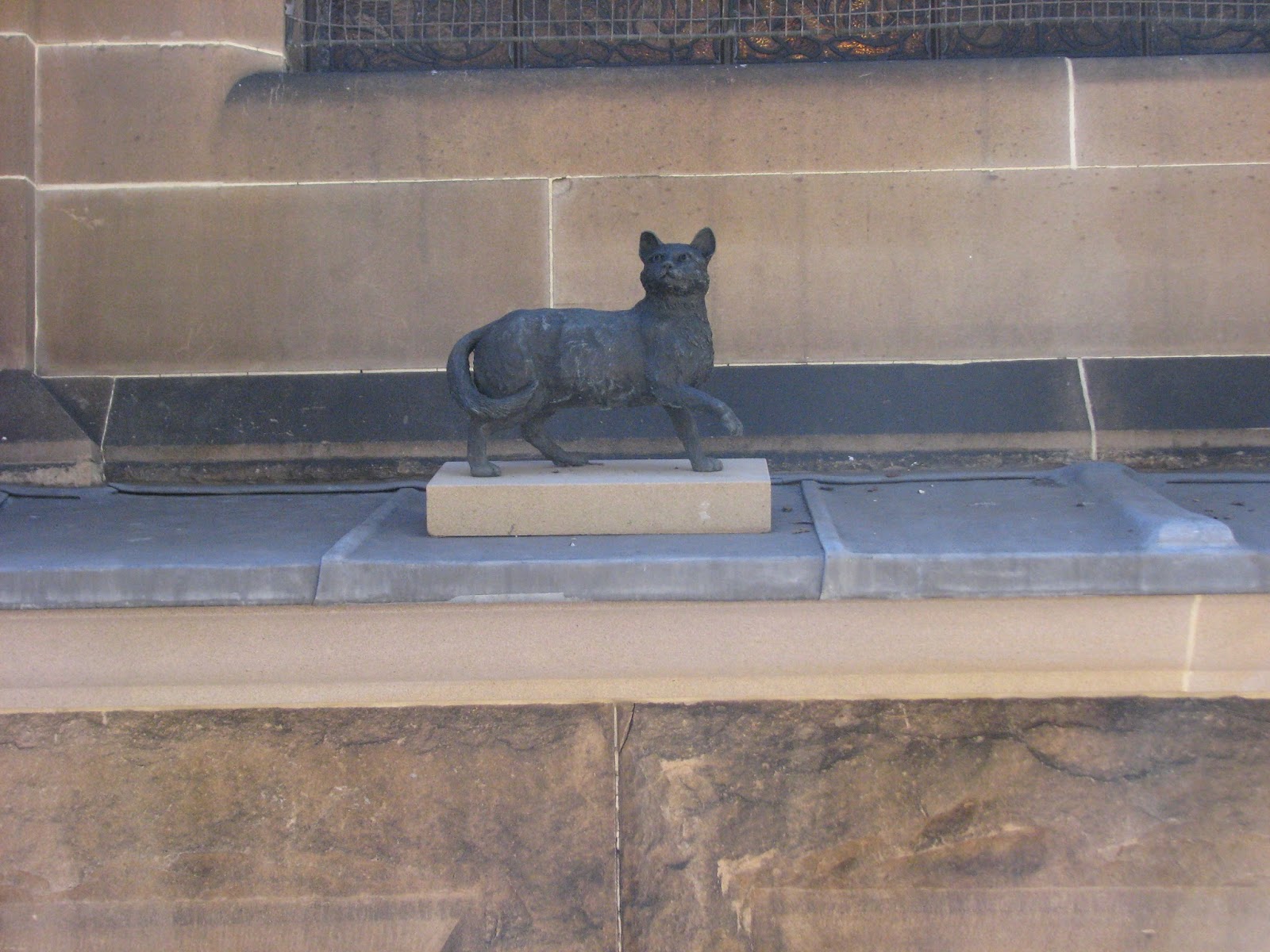
George Bass and Matthew Flinders met as young men on board the HMS Reliance in 1795 on a journey to Sydney and discovered they both shared an interest in navigation and sea exploration. As soon as arriving in the new colony they made plans to explore in a small rowboat called the Tom Thumb, which George Bass had brought with him on the journey.

Their first exploration took them south to Botany Bay where they explored the Georges River (named in honour of King George III) which led to establishment of the settlement of Bankstown. Incidentally this is the area in which I live.
On their second journey they discovered and named Port Hacking and Lake Illawarra.
Both Bass and Flinders, having also explored separately were convinced there was a body of water between mainland Australia and Van Diemen's Land and in 1798 they rowed along the northern coast of Van Diemen's Land, and rowed up the Tamar River near where Launceston stands today. While there they climbed Mount Wellington which overlooks Hobart. They proved that there was water between Australia and Van Dieman's Land and it was named Bass Strait by Governor Hunter.

George Bass resigned from the Royal Navy and sailed trading vessels until in 1803 he left Sydney Harbour for Chile and neither he nor his boat or crew were ever seen or heard from again.
In 1803 Matthew Flinders sailed for England as a passenger on a ship which was wrecked on a coral reef off the Queensland coast, he took control of the lifeboat and sailed it back to Sydney to get help for his fellow passengers.
He then set sail in a small schooner back to England but it proved unseaworthy and he sailed to Mauritius seeking help but unknown to him at that time England and France were at war and they arrested him as a spy and kept him in gaol on the island for 6 years.
He eventually returned to England in 1810 and in poor health died just 4 years later in 1814
Both of these men had a great influence on the exploration of the Australian coastline as we know it today.